The average lifespan of a quality mattress is approximately ten years, yet many sleepers notice structural dips much sooner. When materials like low-density polyfoam or budget coils lose their resilience, your spine loses its neutral alignment, leading to chronic morning back pain and persistent fatigue. Often, the culprit is not just age, but a combination of moisture-driven material breakdown and an incompatible bed frame.
This guide explains why mattresses lose their shape, how to measure sag depth for warranty claims, and the best ways to restore your sleep quality.
- Why Mattress Sag Occurs and How Materials Fail
- 3 Ways to Diagnose Structural Mattress Failure
- How to Prevent Premature Mattress Dipping
- When Is It Time to Replace Your Sagging Mattress?
Why Mattress Sag Occurs and How Materials Fail
Structural sagging exceeding 1.5 inches compromises spinal alignment, often caused by foam oxidation or foundation failure. High-density foams and proper center support legs remain the primary defenses against permanent material fatigue and moisture-driven degradation.
The mention of material fatigue leads directly into the distinction between normal wear and structural failure.
Material Fatigue and the Breaking In Distinction
New foam layers naturally soften during a brief breaking in period. This involves minor comfort adjustments as materials conform to your body. However, genuine sagging creates a deep, non-recoverable crater. This distinction is vital for warranty claims and long-term spinal health.
Material fatigue eventually becomes a permanent dip in the surface. You should look for a total loss of resilience in the core. If the surface fails to bounce back, the internal structure is broken.
Environmental Breakdown and Foam Density
Moisture from sweat accelerates the chemical breakdown of memory foam cells. Humidity weakens these polymer bonds over time. This leads to premature softening and eventual structural loss in the upper comfort layers.
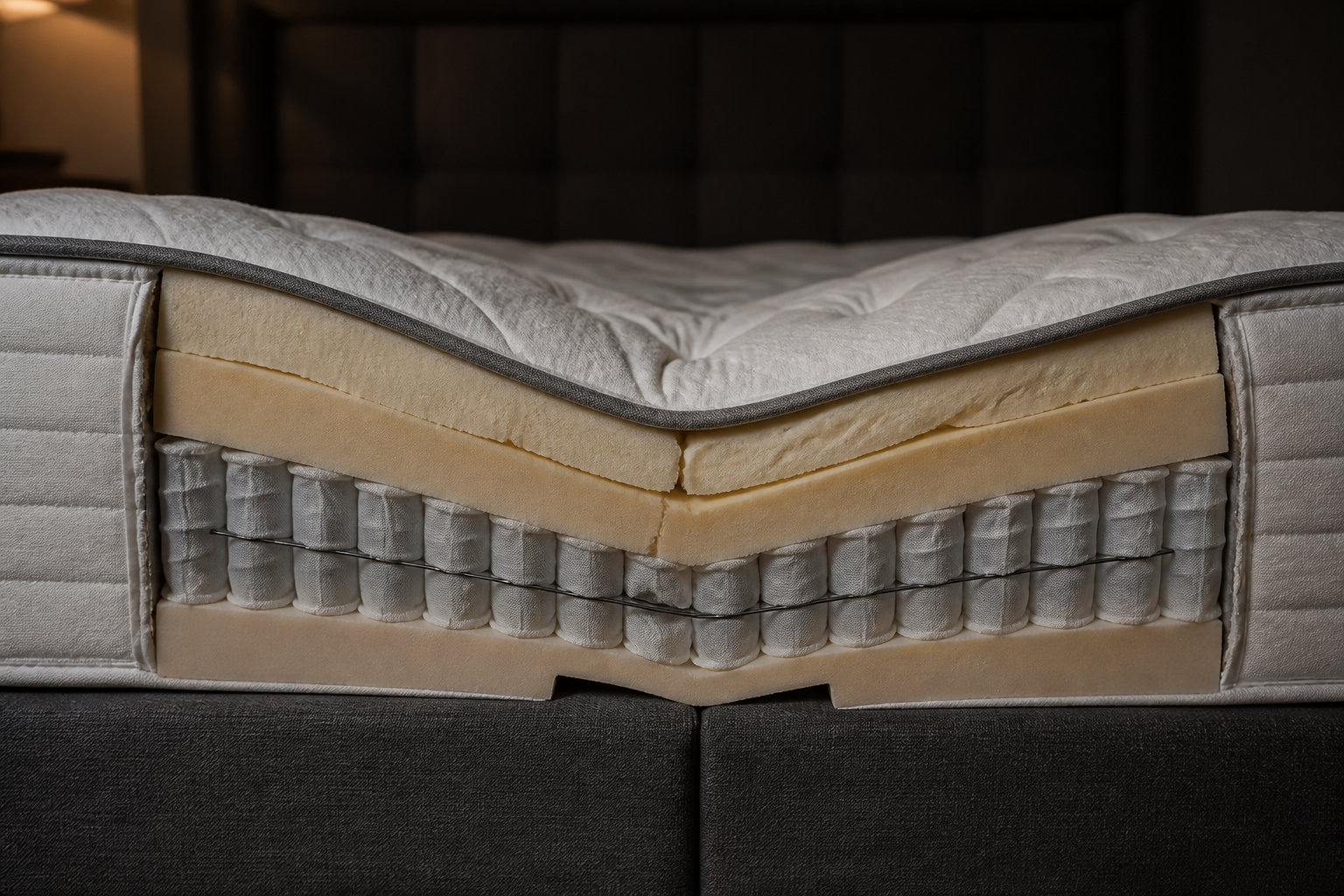
High-density foam offers superior resilience against daily use. Cheap polyfoam lacks the mass to resist compression effectively. Heavy-duty materials last significantly longer than low-grade alternatives.
- Polyfoam density: 1.8lb+ for durability.
- Memory foam density: 4lb+ for support.
- Open-cell structures improve vital airflow.
Impact of Body Weight and Pressure Points
Repetitive sleep positions lead to localized material compression. Sleeping in the same spot every night concentrates pressure. This force eventually crushes foam cells beyond their ability to recover their original shape.
Heavier weight profiles influence the rate of foam oxidation. Increased load generates more friction and heat. This thermal energy speeds up the degradation of the mattress core.
Focus on the hips. This area bears the most weight. Support usually fails here first.
3 Ways to Diagnose Structural Mattress Failure
Identifying the root cause requires more than just a visual guess; you need a systematic diagnostic approach. Here is how you can verify the damage.
Measuring Sag Depth with the String Test
Stretch a string tight across the mattress surface. Do not press into the quilting. Measure the distance from the string to the deepest part of the visible indentation.
Most manufacturers require a 1.5-inch dip for a valid claim. Anything less is considered normal wear.
Document the measurement with photos. Use a clear ruler for visibility. This evidence is essential for any warranty return.
Inspecting the Bed Frame and Center Support
Check for bowed, cracked, or shifting slats. Gaps wider than three inches often cause the mattress to squeeze through and sag prematurely.
Center support legs are vital for Queen and King sizes. Without a vertical leg touching the floor, the frame will bow. This creates a valley in the middle.
| Foundation Type | Common Weakness | Sag Risk | Solution |
|---|---|---|---|
| Slatted Base | Wide gaps | High | Add slats |
| Box Spring | Broken coils | Moderate | Replace unit |
| Platform Bed | Thin rails | Low | Reinforce |
| Metal Frame | No center leg | High | Add leg |
Signs of Poor Spinal Alignment During Sleep
Your torso sinks lower than your head and feet. This unnatural curve forces your muscles to stay active all night. It feels like a hammock-like dip.
Morning lower back pain signals a lack of midsection support. Waking up stiff is a major red flag. If pain vanishes after an hour, the mattress is failing.
Watch for tossing and turning. Your body tries to find support that isn't there. Chronic fatigue often follows structural mattress failure.
How to Prevent Premature Mattress Dipping
Prevention is always cheaper than replacement, so let's look at how to protect your investment from the start.
Choosing the Right Foundation for Your Mattress Type
Evaluate the compatibility of box springs versus solid platform bases. Modern foam mattresses require rigid, non-flexible support. Old-fashioned box springs can actually cause memory foam to dip between the internal coils.
Adjustable bases offer significant benefits for structural longevity. These bases provide full-surface support. They eliminate the weak points found in traditional frames. This keeps the mattress flat and functional.
- Solid platform requirements
- Slat spacing limits
- Weight capacity for heavy hybrids
Rotation Schedules and Moisture Protection
Rotate the bed 180 degrees every three to six months. This ensures even wear across the surface. It distributes body weight across different sections of the foam to prevent deep impressions.
Waterproof protectors block foam-degrading humidity effectively. Liquid spills and sweat ruin the foam's structural integrity. A breathable, waterproof barrier keeps the core dry. This prevents the foam from softening prematurely.
Check the tags. Some mattresses are one-sided. Never flip a mattress unless the manufacturer explicitly says so.
When Is It Time to Replace Your Sagging Mattress?
Sometimes, no amount of rotation or frame checking can save a dead bed, leaving replacement as the only logical path. Why Does My Mattress Sag? Causes, Prevention & When to Replace It is a question that eventually leads to the hard truth of structural failure.
Warranty Coverage and Manufacturer Exclusions
Check the fine print for the 1.5-inch rule. Most brands won't cover minor cosmetic dips. The indentation must be deep enough to prove structural failure. Always check your specific policy before filing a claim to avoid rejection.
Common exclusions include stains or improper frame usage. A single coffee stain can void the entire warranty. Manufacturers are strict about hygiene.
Keep your receipts. Digital copies are safer. Proof is mandatory.
Limitations of Mattress Toppers as Temporary Fixes
A topper cannot restore a failed internal support system. It simply follows the contour of the sag. It provides surface softness but zero structural lift. The valley remains despite the extra layer.
Suggest toppers only for surface comfort rather than structural repair. Use them to soften a bed that is too firm. If the core is broken, a topper is just a waste of money.
Actually, here is how the two options stack up:
- Topper: Low cost, extends life by 6 months max for sags, zero spinal alignment improvement.
- New Mattress: Higher investment, lasts 7 to 10 years, restores proper spinal alignment.
Structural failure stems from material fatigue, poor foundations, or moisture breakdown. Prevent premature mattress dipping by using a rigid base and rotating your bed regularly. If sagging exceeds 1.5 inches, act now to protect your spine and reclaim the restorative, pain-free sleep you deserve for years to come.
FAQ
Why is my mattress starting to sag in certain areas?
Mattress sagging is typically caused by the natural breakdown of internal materials over time. In foam beds, this often stems from foam oxidation and moisture absorption from sweat, which weakens the cell structure. Innerspring models may suffer from material fatigue in the coils or compression of the comfort layers due to repetitive pressure in the same sleeping position.
How can I tell the difference between normal wear and structural failure?
It is important to distinguish between "breaking in" and actual sagging. A new mattress will naturally soften and adjust to your body, which is normal. However, structural failure is characterized by a deep, non-recoverable crater or a loss of resilience where the surface no longer bounces back. If you feel like you are sleeping in a hammock, the core support has likely failed.
What is the best way to measure the depth of a mattress dip?
To get an accurate measurement, perform a "string test." Stretch a piece of string tight across the surface of the mattress without pressing into the quilting. Use a ruler to measure the vertical distance from the string to the deepest part of the indentation. Most manufacturers require a 1.5-inch dip to qualify for a warranty claim.
Can a bad bed frame cause my mattress to sag prematurely?
Yes, an inadequate foundation is a leading cause of premature dipping. For Queen and King sizes, a center support leg touching the floor is vital to prevent the frame from bowing. Additionally, if you use a slatted base, ensure the gaps are no wider than three inches; otherwise, the mattress may squeeze through the openings, destroying its structural integrity.
Will adding a mattress topper fix a sagging bed?
A mattress topper is only a temporary cosmetic fix and cannot restore a failed support system. Because a topper is flexible, it will simply follow the contour of the existing sag, providing surface softness but zero structural lift. While it may offer slight relief for a few months, it will not fix the underlying spinal alignment issues caused by a broken core.
How often should I rotate my mattress to prevent dips?
To ensure even wear and distribute body weight across different sections of the foam, you should rotate your mattress 180 degrees every three to six months. However, always check your manufacturer's tags first; while most modern mattresses should be rotated, many are one-sided and should never be flipped.
What are the requirements for filing a mattress warranty claim?
To successfully claim a warranty, you must provide the original proof of purchase and documentation of the sag depth, usually exceeding 1.5 inches. Be aware that warranties are often voided by physical stains, fluid damage, or the use of an improper foundation. Keeping your mattress clean with a waterproof protector is essential for maintaining warranty eligibility.
When is it officially time to replace a sagging mattress?
You should consider a replacement if you experience chronic lower back pain or stiffness that vanishes shortly after waking up. If the sag is visible, interferes with your sleep quality, or if the mattress is over 7 to 10 years old, the internal materials have likely reached the end of their functional lifespan and can no longer support your spine.