What Is a Plush Mattress? Soft vs Plush vs Medium Explained
Mattress shopping in Australia means navigating a maze of firmness labels that vary from brand to brand. One company's ""plush"" is another's ""medium soft."" One retailer's ""medium"" feels firmer than a competitor's ""firm."" The terminology is inconsistent, and it causes genuine confusion for buyers trying to compare options.
This guide explains what plush actually means, how it differs from soft and medium, and helps you determine whether a plush mattress is right for your body and sleep style.
What Does Plush Actually Mean?
In the Australian mattress market, ""plush"" generally describes a mattress that is softer than medium but not as soft as the softest options available. If you imagine a firmness scale from 1 (extremely soft) to 10 (extremely firm), plush typically falls around 3 to 5.
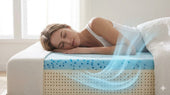
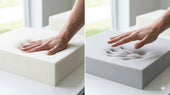
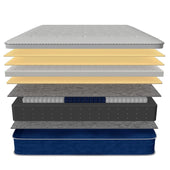
A plush mattress has thicker or softer comfort layers on top, usually memory foam, latex, or high-density polyester fibre, over a supportive core. You sink into a plush mattress more than a medium or firm, with the comfort layers conforming closely around your shoulders, hips, and other pressure points.
The feeling is often described as ""sleeping in"" the mattress rather than ""sleeping on"" it. Whether that appeals to you or not depends entirely on your body, your sleep position, and your personal preference.
Plush vs Soft vs Medium: Key Differences
Soft mattresses (1–3 on the firmness scale) offer the deepest sink and the most body-conforming feel. They provide significant pressure relief but minimal pushback. Very soft mattresses can make it difficult to change positions during the night because you sink deeply into the surface.
Plush mattresses (3–5) offer noticeable cushioning and conforming, but with more underlying support than a soft. You still feel cradled, but the mattress pushes back enough to keep your spine from sagging. This is the sweet spot for many side sleepers.
Medium mattresses (5–6.5) balance cushioning and support more evenly. You feel the comfort layers without sinking deeply. Medium suits the widest range of sleepers and is often recommended for couples with different preferences as a compromise.
The boundaries between these categories are fuzzy, and they shift from brand to brand. A plush mattress from one manufacturer might feel similar to a medium from another. Always test in person when possible, and treat firmness labels as rough guides rather than precise specifications.
How Firmness Scales Work (And Why They Vary by Brand)
There is no universal firmness standard in the Australian mattress industry. Each brand defines its own scale based on its own products. A brand that specialises in supportive mattresses might label its softest option ""plush,"" while a brand known for cloud-soft beds might call a similarly soft mattress ""medium.""
Some retailers use a numbered scale (1 to 10), others use descriptive labels (soft, medium, firm), and a few use both. The only reliable way to compare firmness across brands is to test them yourself or look for independent reviews that describe the feel rather than simply repeating the manufacturer's label.
Who Should Choose a Plush Mattress?
Plush mattresses work well for side sleepers, particularly those with prominent hips and shoulders. Side sleeping concentrates your body weight on a small surface area, and a plush mattress distributes that pressure more evenly, reducing the pins-and-needles feeling and shoulder ache that firm mattresses can cause.
Lighter-weight sleepers (under 65kg) often find plush mattresses comfortable because they do not sink deep enough to lose support. At lower body weights, a medium mattress can feel quite firm, making plush a more appropriate comfort level.
People with joint pain or pressure-point sensitivity may also benefit from plush, as the thicker comfort layers absorb impact at the hips, shoulders, and knees.
Who Should Avoid Plush?
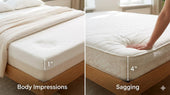
Heavier sleepers (over 100kg) generally need more support than a plush mattress provides. A heavier body sinks further into soft comfort layers, which can cause the spine to sag into a hammock shape, leading to lower back pain over time.
Stomach sleepers should approach plush with caution. Stomach sleeping on a soft surface allows the hips to sink, which hyperextends the lower back. medium to firm is almost always a better choice for stomach sleepers.
If you share a bed and your partner is significantly heavier or lighter than you, a plush mattress might suit one of you perfectly and cause discomfort for the other. In this case, consider a split-firmness mattress or a medium that compromises for both.
Construction: What Makes a Mattress Feel Plush?
The plush feel comes from the comfort layers, the materials on top of the supportive core. Thicker layers of softer materials create a plusher feel. Common comfort layer materials include memory foam (provides slow, deep conforming), latex (provides bouncy, responsive cushioning), and high-loft polyester fibre or quilted pillow tops (provides an initial soft feel that may compress over time).
Beneath the comfort layers, the support core, usually pocketed coils or high-density foam, determines how much the mattress pushes back. A plush mattress with a strong support core feels soft at the surface but still keeps your spine aligned. A plush mattress with a weak support core feels soft everywhere, which is where problems arise.
Testing Firmness: In-Store vs Online
If you can visit a showroom, lie on each mattress for at least ten minutes in your normal sleep position. Five seconds of sitting on the edge tells you nothing useful. Wear comfortable clothing, bring your own pillow if possible, and test at least three firmness levels to calibrate your preferences.
If you are buying online, look for brands that offer an extended trial period, ideally 100 nights or more. Accept that the first mattress might not be perfect, and choose a retailer whose exchange or return process is genuinely hassle-free. Read the fine print: some ""free trials"" charge a restocking or collection fee.
Frequently Asked Questions
Can I make a firm mattress feel plush with a topper? Yes, to a degree. A quality memory foam or latex topper (7cm or thicker) can soften a firm mattress significantly. This can be a cost-effective way to test whether plush suits you before committing to a new mattress.
Does plush mean the mattress will sag quickly? Not necessarily. Sagging is a quality issue, not a firmness issue. A well-constructed plush mattress with high-density foams should retain its feel for years. A cheap plush mattress with low-density foam will lose its cushioning within months.
Is plush the same as pillow top? Not exactly. Pillow top refers to an extra layer of padding sewn onto the top of the mattress. A pillow top mattress is often plush, but a plush mattress does not have to have a pillow top, the soft feel can come from the internal foam layers instead.