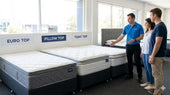
The best mattress for seniors in Australia is one that feels comfortable, supports the sleeper appropriately and makes everyday movement manageable. For some older adults, that means more cushioning at the shoulders and hips; for others, an easier-to-move-on surface, a stable edge and a bed height that suits sitting and standing matter more. Age alone does not determine the right firmness or mattress type.
This guide explains how to compare mattress materials, firmness, total bed height and practical features before buying. It is designed for older Australians making their own choices, as well as family members helping with research—not as a substitute for individual health or mobility advice.
What Should Older Adults Look for in a Mattress?
Start with comfort, support and ease of movement, then consider the wider bed setup. A mattress might feel pleasant while lying down but be difficult to turn on or to get out of. Likewise, a supportive edge is only useful when the base height, floor surface and available space suit the person using it.
|
Senior Sleeping Needs |
Features to Check |
Practical Buying Advice |
|
Comfortable shoulders and hips |
Surface cushioning and how the mattress responds to pressure |
Test in your usual sleeping position; check for uncomfortable pressure or excessive sinking |
|
Easy turning and repositioning |
Surface responsiveness and freedom of movement |
Try rolling from back to side without needing to push hard against the mattress |
|
Sitting and standing at the bedside |
Edge stability and total bed height |
Test the complete bed setup, not just the mattress in isolation |
|
Support for different body builds |
Overall support construction, base compatibility and stated load limits |
Notice whether the midsection sinks excessively; avoid rigid weight-based firmness rules |
|
Warm nights or changing temperature preferences |
Bedding, mattress cover, airflow and protector |
Test the complete sleep setup; no material guarantees a cooler night's sleep |
|
Long-term everyday use |
Care instructions, rotation guidance and warranty conditions |
Check what is actually covered and whether the mattress can be handled for maintenance |
Which Mattress Type Is Best for Seniors?
There is no universally best material for older adults. The feel and usability of a finished mattress depend on its layers, design and base—not its category name alone.
|
Mattress Type |
Potential Benefits |
Limitations |
Best For |
|
Memory foam |
Conforming surface; may feel comfortable to people who prefer a more enveloping feel |
Some designs feel slow to respond, making turning harder; temperature experience varies |
Shoppers prioritising a contouring feel who can reposition comfortably |
|
Latex |
Often responsive with a buoyant feel |
Can feel springy; firmness and weight vary by product |
People who prefer responsive cushioning and easier repositioning |
|
Pocket-spring |
Individually wrapped springs can respond more independently; construction choices vary |
Comfort and movement depend on the layers above the springs |
Shoppers wanting to compare spring-based support and surface comfort |
|
Hybrid |
Combines a spring system with foam, latex or other comfort layers |
Not automatically the best choice for every body or mobility need |
People seeking to compare cushioning and support in one design |
|
Clinically specified pressure-care surface |
Designed for particular pressure-management needs when clinically assessed |
Requires appropriate assessment and use; is not interchangeable with an ordinary mattress |
People advised by a qualified clinician to use specialised pressure-care equipment |
Buying tip: Spend time on the actual model and, where feasible, the base it will be used with. A well-made soft mattress may feel supportive, and a very firm one may create uncomfortable pressure points.
Should Seniors Choose a Soft, Medium or Firm Mattress?
Medium or medium-firm is a reasonable comparison starting point, not a rule. Firmness labels and 1–10 ratings are not standardised across manufacturers. An older person who sleeps on their side may value more shoulder and hip cushioning, while someone who finds deep sinking makes it harder to turn may prefer a more responsive surface.
|
Firmness Level |
Typical Feel |
Considerations for Older Adults |
|
Soft |
More cushioning and sink |
Check pressure comfort, but also whether turning and getting up feel manageable |
|
Medium |
Balance of cushioning and resistance |
A practical starting point if preferences are uncertain; assess actual support |
|
Medium-firm |
More surface resistance with some give |
May suit people who prefer easier movement, provided it remains comfortable |
|
Firm |
Limited sinking |
May feel stable to some sleepers but uncomfortably hard at shoulders or hips for others |
Why Firmness and Support Are Not the Same
Firmness is how hard the surface feels; support is how the mattress carries your body. A rigid surface is not necessarily more supportive.
Two people can experience the same mattress differently because of their body shape, weight distribution and sleeping position. For a deeper comparison of the 1–10 scale and sleep styles, use DuuDuu's mattress firmness guide.
Why Edge Stability and Bed Height Matter
A mattress edge should feel stable when the sleeper sits near it. If the edge collapses noticeably, sitting, shifting position or preparing to stand may feel awkward.
Still, a reinforced edge is not a fall-prevention device and does not make a transfer safe by itself.
Just as important is the height of the complete bed. A 30 cm mattress on a low base creates a different sitting height from the same mattress on a tall frame.
When trialling a bed, check whether the person can sit comfortably with their feet supported and stand without an awkward climb or uncontrolled drop. There is no universal centimetre target that fits everyone.
Clear walking routes, adequate night lighting and sturdy furniture are also important. Australia's Better Health Channel recommends that beds be sturdy and easy to get into and out of as part of home fall-prevention guidance.
For more detail on the perimeter itself, see DuuDuu's guide to mattress edge support.
People who have difficulty standing, transferring or managing falls should seek advice from an occupational therapist, physiotherapist or another qualified professional before choosing a bed setup.
What About Side Sleeping, Back Discomfort and Body Weight?
Side Sleepers and Pressure Comfort
When lying on your side, notice whether the shoulder and hip have enough give without the torso feeling unsupported.
A cushioning layer can improve the feel of the mattress, but it should not be described as treating arthritis, osteoporosis or another condition.
Back and Combination Sleepers
Back sleepers may prefer a balanced surface that supports the midsection comfortably. People who change positions often should also test how easily they can turn.
A very soft, slow-response surface can feel comfortable initially but awkward to move on for some people.
If back pain is the main reason for shopping, DuuDuu has a separate Australian mattress guide for back pain.
Persistent or worsening pain needs clinical assessment rather than a promise that a new mattress will solve it.
Does Body Weight Determine Firmness?
Not by itself. Body weight can influence how deeply someone sinks into a particular design, but height, shape, sleep position and the support system matter too.
Check the manufacturer's load and base requirements, then compare the feel rather than following a fixed kilograms-to-firmness chart.
When Do You Need a Specialised Mattress Instead?
A standard retail mattress is not a substitute for a clinically recommended pressure-care surface.
Someone who spends long periods in bed, has significantly limited mobility, has an existing pressure injury or is at risk of skin breakdown may require an assessment and specialised equipment.
A mattress advertised as "pressure relieving" does not prove it can prevent or treat pressure injuries.
Similarly, adjustable or electric bases may help with some positioning needs, but not every mattress is compatible. Confirm the specific manufacturer's compatibility and seek appropriate professional guidance if the bed is part of a mobility or medical care plan.
Choosing a Mattress for Warm Australian Nights
In Perth and elsewhere in Australia, summer heat and indoor humidity can affect comfort.
Consider practical changes first: suitable sheets and protectors, safe ventilation, shading during the day and a room temperature that feels comfortable.
A fabric branded cooling is not evidence that a mattress will maintain a particular skin temperature or improve sleep stages.
Keep maintenance practical too. A very heavy mattress may be difficult to move for cleaning or rotation, so ask for its weight and care instructions before purchasing.
Do not assume removable covers are machine-washable unless the label confirms it.
Is the DuuDuu Hybrid Mattress Suitable for Older Adults?
The DuuDuu Hybrid Mattress is one ordinary consumer mattress to compare, not a specialised medical mattress.
Its live listing describes latex and foam comfort layers, three-zone pocket springs, a woven cover and a reinforced perimeter. The listed mattress height is 30 cm across its Australian size range.
Those features give shoppers useful points to assess—surface feel, movement, edge stability and the final height when paired with a base.
They do not establish that the mattress prevents falls, treats pain or suits all older adults.
The product page advertises a 100-night trial and 10-year warranty, but conditions apply. Its stock and price displays have shown conflicting messages, so check the chosen variant, current terms and actual availability before ordering.
Check adjustable-base compatibility directly with DuuDuu before purchase; it is not established by the current public specifications.
Mattress Buying Checklist for Seniors and Carers
- Ask what feels uncomfortable now. Is it pressure, heat, difficulty turning, or getting in and out of bed?
- Try the usual sleeping positions. Spend enough time lying on the mattress to assess shoulder, hip and torso comfort.
- Test movement. Turn over, sit up and sit near the edge without rushing or forcing an unsafe transfer.
- Check total bed height. Include the mattress, base and any topper; the final setup should suit the individual.
- Measure the room. Allow clear access around the bed and to the bathroom at night.
- Verify compatibility. Check the base type, support requirements, load limits and any adjustable-base restrictions.
- Read the trial and warranty conditions. Confirm eligibility, minimum-use terms, collection arrangements and exclusions.
- Get personalised advice when needed. Falls history, serious mobility limitations or pressure-injury risk call for assessment beyond a retail buying guide.
Frequently Asked Questions About Mattresses for Seniors
What is the best mattress for seniors in Australia?
The best option is a mattress that fits the person's comfort, movement and support needs. Compare cushioning, ease of turning, edge stability and the total height of the bed, rather than choosing a product because it is labelled for seniors.
Do older people need a softer or firmer mattress?
Not automatically either. Medium and medium-firm are reasonable comparison points, but age alone does not determine firmness. The individual's sleeping position, preference and ability to move on the surface matter more.
Is memory foam or a hybrid mattress better for older adults?
Neither type is universally better. Some foam designs offer a more contouring feel, while some hybrids feel more responsive. Test actual models for comfortable support, turning, temperature and stability near the edge.
What mattress helps an older person get out of bed more easily?
Look at the complete bed setup, not only the mattress. A stable edge, manageable surface feel, suitable mattress-and-base height and clear floor space may all matter. If transfers are difficult, seek individual professional advice.
How high should a bed be for an older adult?
There is no single correct bed height for every older adult. The person should be able to sit and move comfortably with appropriate foot support, subject to their mobility needs. A clinician or occupational therapist can assess more complex situations.
Can a mattress prevent falls or pressure sores?
An ordinary retail mattress cannot be relied on to prevent falls or pressure injuries. Home safety and mobility need broader assessment, while people at risk of skin damage may need specialist pressure-care equipment and clinical guidance.
Are adjustable beds suitable for older people?
They may be useful for some people, but compatibility and individual needs must be checked. Not every standard mattress works with an adjustable base; consider both the manufacturer's instructions and professional advice where required.
Is a 30 cm mattress too thick for a senior?
Not necessarily. What matters is the final sitting height when that mattress is placed on the selected base, together with the person's mobility and comfort. Measure the full setup instead of judging suitability from mattress depth alone.
Choose a Mattress Around the Person, Not Their Age
The right mattress supports everyday comfort without creating new practical difficulties.
Prioritise how it feels when lying down, turning, sitting and standing; confirm the total bed height and base; and seek specialist help where medical needs affect the decision.
Explore the current mattress and bedding options at DuuDuu Australia, using the verified product details and return conditions to make an informed choice.