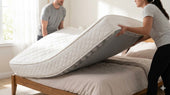
- Firmer mattresses (rated 7 to 10) keep the spine aligned by stopping the body from sinking too deeply.
- A firmness rating of 7 is generally the sweet spot, giving solid support with just enough cushioning.
- Soft mattresses can create pressure points and restrict circulation around the shoulders and hips.
- Firm mattresses tend to last longer because they sag less, and they handle Australia's warm summers better with improved airflow.
- Chiropractors recommend firmer surfaces for FIFO workers, office workers, and anyone with chronic back pain.
When it comes to buying a new mattress, firmness is one of the most critical factors.
Whether you're a side sleeper, a back sleeper, or someone with specific health concerns, the firmness level of your mattress can significantly impact the quality of your sleep and overall health.
Understanding Mattress Firmness Levels
Mattress firmness is generally rated on a scale of 1 to 10, with 1 being the softest and 10 being the firmest.
Soft mattresses, typically rated between 1 and 3, offer a plush, sinking feeling, while firm mattresses (7 to 10) provide a more stable and supportive surface.
Firm mattresses rated at level 7 are often considered optimal, as they strike the perfect balance between support and comfort.
But why do chiropractors and sleep experts consistently recommend firmer mattresses, especially in a place like WA where physical activity and work conditions (e.g., fly-in fly-out or FIFO workers) demand proper rest and recovery?
The Benefits of a Firmer Mattress
-
Better Back and Spinal Support One of the most significant advantages of a firm mattress is its superior support for the back and spine. Soft mattresses may feel luxurious, but they can cause your body to sink in too deeply, leading to misalignment of the spine. Over time, this can result in discomfort and even chronic back pain.
A firmer mattress helps to maintain the natural curvature of your spine by providing even support across your body. This ensures that your spine stays in alignment, which is particularly important for people with existing back pain or those seeking to prevent it.
-
Chiropractor-Approved Chiropractors across Australia strongly recommend firmer mattresses to promote proper spinal alignment. When sleeping on a soft mattress, pressure points can develop, particularly around the lower back and hips, leading to stiffness and pain. A firmer surface distributes your body weight more evenly, reducing the risk of pressure points and allowing for better relaxation.
Studies have shown that sleeping on a firmer mattress can alleviate symptoms of lower back pain, a common issue faced by those in physically demanding jobs or those who sit for long periods of time during the day.
-
Improved Circulation Softer mattresses can cause your body to sink too much, creating pressure points that restrict blood flow. A firmer mattress ensures even weight distribution, which reduces the risk of pressure building up around specific areas such as the shoulders and hips. This improved circulation can lead to a more restful sleep, as your body is less likely to experience discomfort during the night.
-
Enhanced Comfort for Various Sleep Positions While many assume that side sleepers require a soft mattress, the truth is that firmer mattresses can be equally comfortable for all sleep positions. Whether you sleep on your back, side, or stomach, a firm mattress will provide the support you need to keep your body aligned. For side sleepers, the firmness ensures that your hips and shoulders are adequately supported, while back and stomach sleepers benefit from the mattress preventing excessive sinking.
Why Some People Prefer Softer Mattresses
Despite the numerous benefits of a firmer mattress, some people still prefer softer options.
This preference often comes down to personal comfort and the sensation of "sinking into" the mattress.
Softer mattresses offer a more plush and cushioned feeling, which some individuals find comforting, especially those with specific conditions like arthritis or joint pain.
However, many people who opt for softer mattresses do so without fully understanding the long-term consequences on their posture and spinal health.
While soft mattresses may feel luxurious initially, they often lack the proper support needed for a restful and healthy sleep.
Over time, this can result in discomfort, back pain, and even sleep disturbances due to poor body alignment.
The Sweet Spot: Firmness Level 7
For those who are hesitant to fully commit to a very firm mattress (rated 8 to 10), level 7 is often the perfect compromise.
A mattress with a firmness rating of 7 provides the ideal balance of comfort and support.
You won’t experience the excessive sinking sensation of softer mattresses, but you'll still enjoy a slight level of cushioning that cradles your body while keeping your spine in proper alignment.
Level 7 mattresses are particularly popular in WA because they offer a comfortable surface that suits a wide range of sleepers.
Whether you're young or old, dealing with back pain, or simply seeking a good night's sleep, a mattress with this optimal level of firmness is a great investment for long-term comfort.
Why Should You Choose a Firmer Mattress
WA’s diverse and active population includes everyone from FIFO workers to office professionals and retirees.
No matter your occupation or lifestyle, sleep is critical for recovery and maintaining your overall health. A firm mattress offers:
-
Durability and Longevity Firm mattresses tend to last longer than softer ones, as they are less prone to sagging over time. Given Australia's climate and lifestyle, investing in a durable mattress that stands the test of time is essential.
-
Better for Couples For couples, finding the right mattress can be a challenge, especially if one person prefers a firmer surface while the other prefers a softer one. Firm mattresses with motion isolation properties ensure that movement on one side of the bed won’t disturb the other, leading to a more peaceful sleep for both individuals.
-
Climate Considerations Australia's climate, especially during the hot summer months, can make sleeping on a softer mattress uncomfortable. Softer mattresses tend to retain heat more, leading to discomfort during the night. Firm mattresses, on the other hand, often allow for better air circulation and help keep you cool as you sleep.
Common Misconceptions About Firm Mattresses
Many people mistakenly believe that firm mattresses are uncomfortable or that they cause stiffness and pain.
However, these issues typically arise when the mattress is too firm or if the mattress is of poor quality.
It's essential to choose a high-quality mattress that offers firm support without feeling rigid or uncomfortable.
In addition, some people think that firmer mattresses are only suitable for individuals with back pain.
While they are certainly beneficial for those dealing with discomfort, firm mattresses are ideal for anyone looking to improve their sleep posture and prevent future health issues.
Choosing the Right Mattress
When selecting a firm mattress, it’s important to consider the materials used and the mattress’s overall construction.
For example, hybrid mattresses, which combine foam and coil layers, offer the best of both worlds by providing firm support with a touch of cushioning.
In Australia, where lifestyle demands are high, choosing a mattress that offers optimal support and comfort is a sound investment in your health.
It’s also wise to take advantage of local mattress stores that allow you to test the firmness level before purchasing.
This ensures that you’re choosing a mattress that feels right for your body while still offering the level of support recommended by chiropractors.
Firmer Mattresses for Healthier Sleep
In conclusion, a firm mattress—especially one with a firmness level of 7—offers numerous benefits for your health, comfort, and overall well-being.
Chiropractors recommend firmer mattresses because they provide better support for the spine, distribute weight more evenly, and promote better sleep posture.
So, when considering your next mattress purchase, opt for a firmer option to enjoy restful, pain-free sleep and wake up feeling refreshed.
How can I tell if my mattress is too firm rather than just supportive?
If you wake with shoulder, hip, or knee pain that wasn't there before, the mattress is likely too firm. You shouldn't be able to slide your hand easily under your lower back when lying on your back. If there's a gap, the mattress isn't accommodating your natural spinal curve.
Will a firm mattress feel less comfortable in winter?
The firmness itself doesn't change with temperature, but very firm mattresses can feel harder when cold because materials lose some flex. Quality firm mattresses with breathable fabric layers maintain consistent comfort year-round. A wool or cotton mattress topper can soften the perceived firmness in winter.
Are firm mattresses harder to break in?
Yes, firm mattresses typically need 30 to 60 days of consistent use to feel their best. Your body adapts to the firmness while the mattress materials settle. If it still feels uncomfortable after 60 days, the firmness probably isn't right for you.
Do firm mattresses have a higher resale value?
Generally yes, because firm mattresses sag less than soft ones and look closer to new for longer. If you're someone who upgrades mattresses every few years, firm hybrids retain more value on the second-hand market than soft foam alternatives.
Should I get a firm mattress if my partner prefers softer?
Compromise on medium-firm (around 6 to 7 out of 10), which leans firm but accommodates both preferences. Alternatively, get a firmer mattress and add a soft topper to your partner's side. Split firmness models are another option for couples with strong differences.
Can a firm mattress cause numbness in arms or legs?
Yes, if it's too firm for you. Numbness happens when pressure points restrict circulation, which can occur on a mattress that's harder than your body needs. The fix is to either reduce firmness or add a contouring topper that distributes weight better.
Are firm mattresses better for bigger or heavier people?
Generally yes. People over 100 kg need firmer support to prevent excessive sinking that misaligns the spine. Look for firm hybrid mattresses with high spring count (500+) and high-density foam, since these handle weight better than budget firm mattresses.
Will a firm mattress help with sciatica?
Often yes, since firmer support keeps the lower back and pelvis aligned, reducing pressure on the sciatic nerve. The exact firmness depends on your weight and sleep position. If pain doesn't improve after 60 days on a new firm mattress, see a chiropractor or physiotherapist.
Are budget firm mattresses worse than budget soft ones?
Budget firm mattresses tend to be harder rather than supportive, since the materials don't have the engineering to provide give where needed. A cheap soft mattress feels comfortable initially but sags fast. For quality, mid-range firm beats both budget options on durability.
How long do firm mattresses typically last compared to soft ones?
Quality firm mattresses last 8 to 12 years on average, compared to 5 to 7 for soft mattresses. Firmness slows the breakdown of foam layers, and firm hybrids with strong coil systems hold their shape longest. Latex firm mattresses can reach 12 to 15 years.