A reinforced mattress perimeter can expand your usable sleep surface by up to 20%, yet this structural feature is frequently overlooked during the buying process. When edges lack integrity, couples often find themselves crowded in the center to avoid the sensation of rolling off the bed.
This guide explains how mattress edge support functions to stabilize your sleep environment and identifies the specific mechanical systems that prevent premature sagging and spinal misalignment.
- Defining Mattress Edge Support and Its Functional Role
- Mechanical Systems Used to Stabilize Mattress Boundaries
- Target Users Who Benefit Most From Edge Reinforcement
- Connection Between Edge Integrity and Spinal Health
- Long Term Value of a Reinforced Mattress Perimeter
- How to Identify Quality Edge Support Before Buying
Defining Mattress Edge Support and Its Functional Role
Steel coil perimeters and high-density foam rails define edge support, preventing the "roll-off" sensation while expanding usable sleep surface by 20%. These structural reinforcements are vital for mobility and long-term mattress durability.
Actually, the Mattress Edge Support Explained: Why It Matters for Couples and Better Sleep starts with understanding the physical frame. A solid border changes everything.
The Primary Purpose of a Reinforced Mattress Perimeter
A perimeter reinforcement creates a firm physical barrier. It stops that annoying feeling of falling. You stay securely on the bed all night.
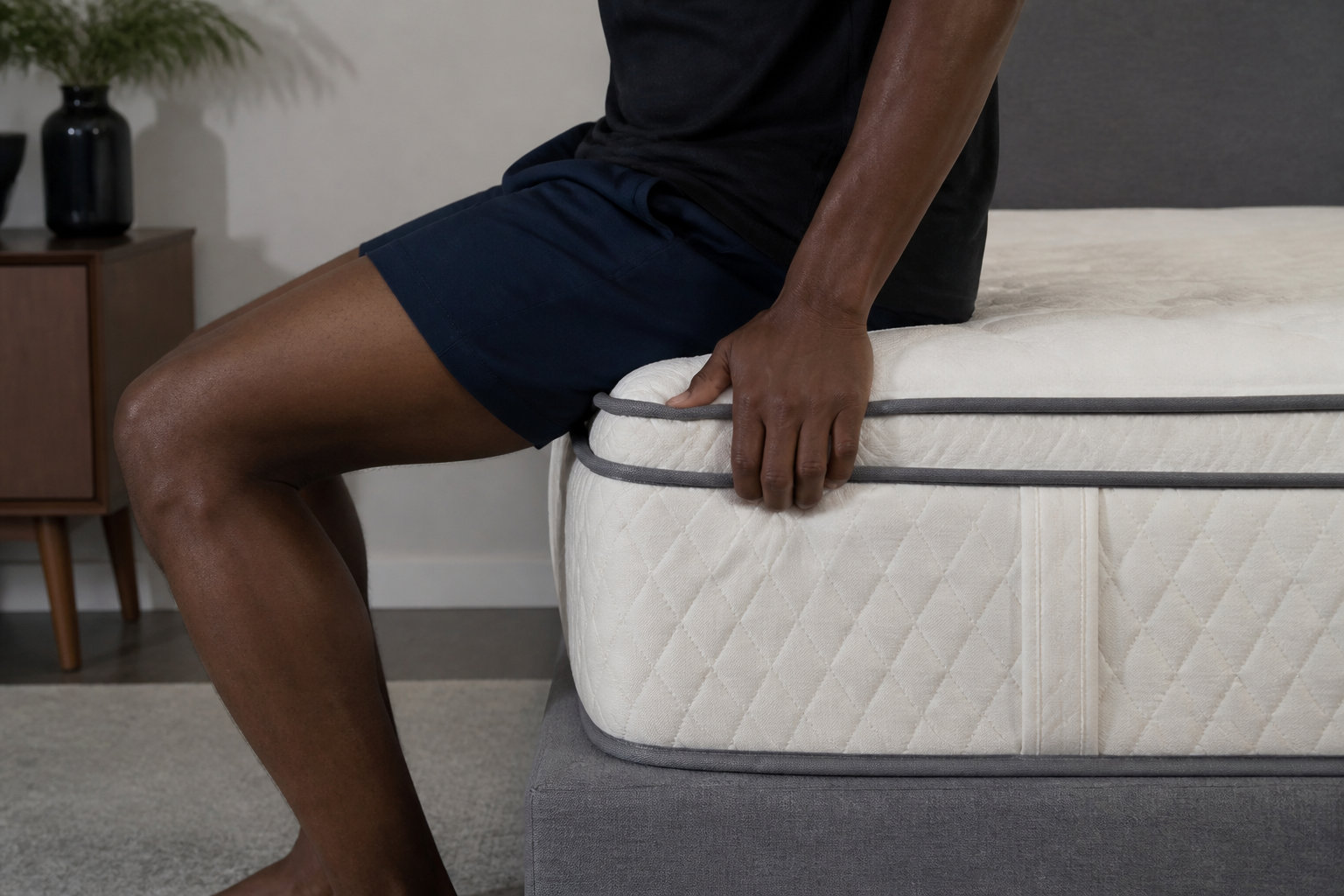
Mechanical strength matters when you sit down. Firm edges support your full body weight every morning. This prevents the foam collapse common in cheaper, flimsy models.
Stable borders offer real psychological security. You won't fear rolling onto the floor. Structural integrity is truly the key differentiator for quality beds.
But having a strong border isn't just about safety; it is about reclaiming your space.
Expanding the Usable Sleep Surface for Maximum Comfort
Weak edges effectively shrink your bed width. Edge compression forces you toward the hot center. This wastes valuable real estate in smaller bedrooms.
Reinforced edges allow you to use the full width. You can sleep right at the boundary comfortably. This is vital for couples sharing a Queen-sized mattress.
A wider feel significantly reduces nighttime awakenings. More usable surface area means freedom of movement. You finally get the space you paid for.
Yet, even the best beds can fail over time, and you need to know what to look for.
Identifying Signs of Structural Failure at the Bed Sides
Look for visible sagging or bowing at the sides. These visual indicators suggest internal support has failed. The mattress loses its original rectangular shape.
Weak borders create a nasty sloping effect. It feels like the bed is actively ejecting you. You might even slide off while sleeping.
Spinal misalignment often follows a collapsing edge. Persistent back pain results from sleeping on uneven surfaces. Don't ignore these warning signs of degradation.
- Dipping when sitting
- Sliding off while sleeping
- Visible gaps between the mattress and frame
- Soft spots along the perimeter
Mechanical Systems Used to Stabilize Mattress Boundaries
Understanding the purpose is one thing, but the real magic lies in the engineering hidden beneath the fabric cover.Reinforced Coil Gauges Versus High Density Foam Rails
Steel coils offer superior longevity compared to polyfoam. Foam rails are quieter but can soften faster. Both aim for perimeter stability. Choosing between them depends on your durability needs.
Manufacturers use firmer gauges on the outer rows. This creates a literal wall of support for the sleeper. It prevents that annoying feeling of sliding off the bed at night.
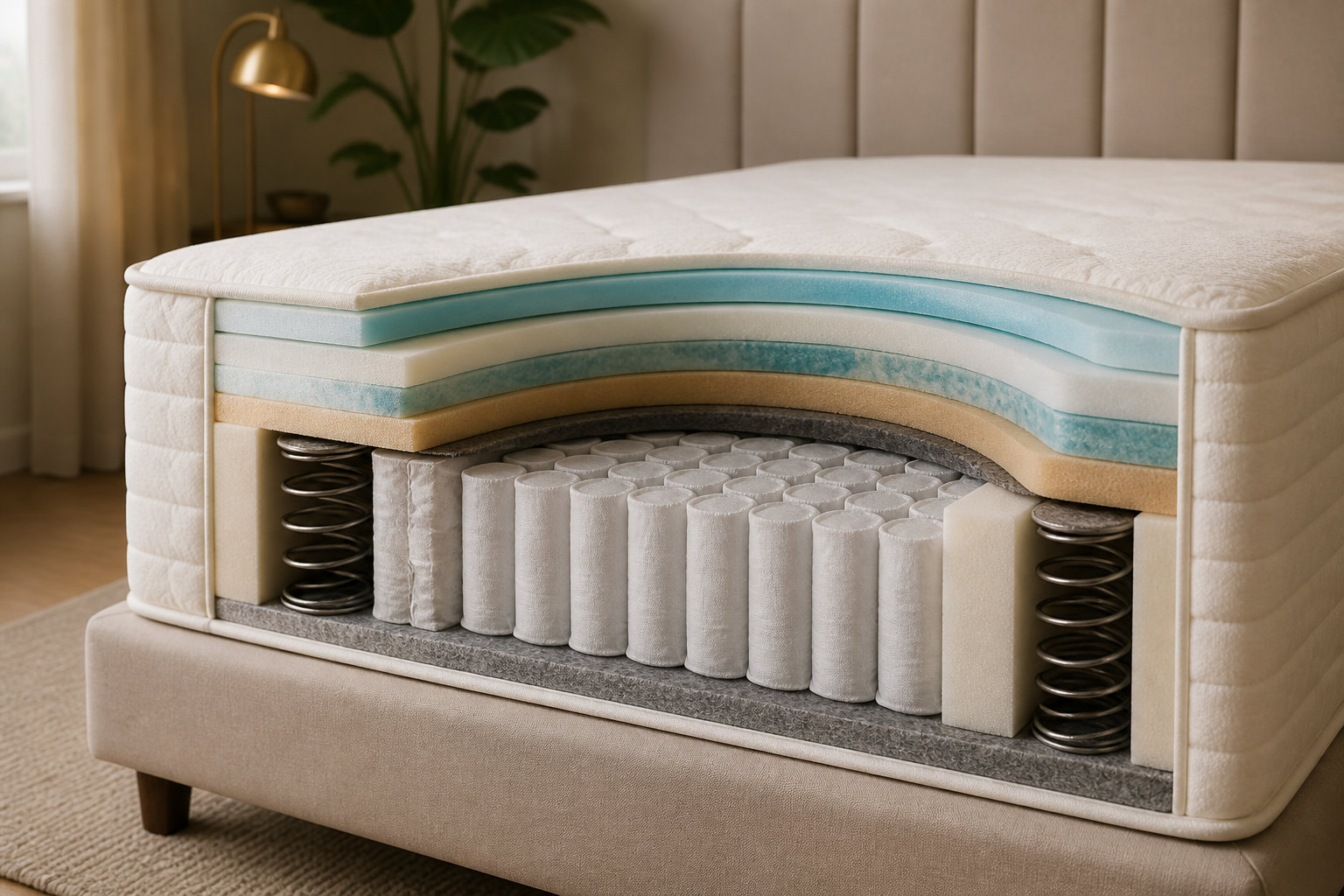
High-density foam is glued to the core. It provides a consistent feel across the entire mattress surface. This ensures you don't feel a sudden drop-off when moving toward the edge.
The Impact of Mattress Height on Perimeter Stability
Thick comfort layers can lead to more lateral movement. This makes the edge feel less secure. A taller profile often sacrifices some rigidity for a plusher initial feel.
Deep compression happens in high-profile mattresses without proper side support. The leverage of a 14-inch bed requires stronger reinforcement than a thin one. Without it, the sides simply buckle under weight.
A tall bed on a high frame increases exit difficulty. The edge must remain firm to ensure safety. Otherwise, getting up becomes a daily struggle for anyone with limited mobility.
Why Hybrid Designs Typically Outperform All Foam Models
Steel springs resist compression better than air-filled foam cells. This leads to a much firmer border. Physics simply favors the structural integrity of metal over flexible polymers.
Coils allow heat dissipation at the edges. Foam borders can trap heat and soften the material prematurely. Keeping the perimeter cool actually helps maintain its original firmness over time.
Some premium foam beds use advanced reinforcements. They can rival hybrids if the density is high enough. Don't dismiss all-foam options immediately, but verify the density specs first for Mattress Edge Support Explained: Why It Matters for Couples and Better Sleep.
Target Users Who Benefit Most From Edge Reinforcement
While everyone appreciates a sturdy bed, certain sleepers find that perimeter strength is a non-negotiable requirement for their lifestyle.Why Couples Require Edge Support for Motion Isolation
Firm edges allow partners to spread out across the entire surface. Couples often fight for space in the middle. Strong edges double the comfortable sleep zone by utilizing every inch.
Stability is directly linked to motion isolation. A weak edge causes the whole bed to shake when one partner moves. Reinforced perimeters dampen these vibrations effectively. This ensures both partners stay asleep.
A stable base is necessary for movement during intimate activities. It prevents the mattress from bottoming out at the sides. This structural integrity maintains comfort and support during active use.
The Sit to Stand Transition for Individuals With Limited Mobility
The mattress edge serves as a stable platform. Mobility-challenged users rely on the edge for leverage. A soft border makes standing up dangerous and physically exhausting for the user.

Safety is paramount for elderly users. Falls often happen during the transition out of bed. A firm edge provides a reliable grip point. It supports the sit-to-stand motion perfectly without collapsing.
Independence is vital for sleepers at home. Being able to exit bed alone boosts confidence and safety. This is a critical functional requirement for aging in place effectively and securely.
Support Requirements for Heavier Sleepers Near the Boundary
Compression challenges are a reality for many. Higher body mass puts extreme stress on the mattress perimeter. Standard edges often fail under this concentrated weight, leading to a rolling-off sensation.
Standard edges fail because deep compression causes the material to bottom out quickly. This leads to permanent sagging in just a few months. Strong steel coils are usually required for durability.
Construction types matter for long-term support. Look for zoned support systems. These provide extra resistance where the weight is most concentrated at the edge, ensuring the mattress retains its shape.
Connection Between Edge Integrity and Spinal Health
Beyond simple comfort and ease of movement, the stability of your bed's border directly dictates how your back feels every morning.
Preventing the Rolling Off Sensation During Deep Sleep
Feeling insecure prevents the brain from entering deep sleep. The fear of falling causes constant micro-awakenings. You never truly reach the restorative phases your body requires.
Muscles stay tight to prevent rolling off the bed. This involuntary tension lasts all night. You wake up feeling exhausted rather than refreshed and ready.
Uninterrupted sleep requires a sense of physical safety. A reinforced edge provides the peace of mind needed for the body to fully relax. This promotes healthier sleep stages, including vital REM cycles.
How Edge Compression Affects Hip and Shoulder Pressure
A dipping edge causes the spine to curve unnaturally. This puts massive pressure on the lower shoulder. Side sleepers suffer the most from this lack of alignment.
Uneven support leads to stiffness in the hips and neck. The body tries to compensate for the slope all night. This results in chronic pain over time if the perimeter fails.
A level surface is mandatory for orthopedic health. The edge must match the center's support level. This ensures the spine stays in a neutral, healthy S-shape.
Relationship Between Overall Firmness and Perimeter Strength
A plush feel doesn't mean the edges are weak. Structural reinforcement happens deep inside the support core. You can enjoy softness without sacrificing the bed's boundary.
Comfort layers provide softness, while the perimeter provides stability. You can have both in a high-quality hybrid model. The two features work together for total body support.
Firmness is a preference, but edge support is a structural necessity. Even a soft bed can have reinforced steel borders. Don't sacrifice comfort for stability; seek a mattress that offers both.

Long Term Value of a Reinforced Mattress Perimeter
Investing in a bed with a solid border isn't just about tonight's sleep; it's a financial decision that impacts the next decade.
Preventing Premature Sagging and Structural Breakdown
Weak edges effectively kill mattresses. Premature sagging often starts at the perimeter and then spreads inward. This process shortens the lifespan of your investment significantly over time.

The perimeter acts as a retaining wall for the comfort layers. It prevents the internal foam from shifting or bunching during use. This structure maintains the original shape for many years.
Paying more for quality edges saves money long-term. You get a durable product. You won't need a replacement every three years due to collapse.
Compatibility With Adjustable Bases and Moving Parts
Adjustable bases stress the mattress perimeter during articulation. The edge must remain flexible yet strong. It needs to bend without snapping.
Some stiff foam rails can crack or detach when folded. This ruins the structural integrity of the bed. Choose hinged or pocketed edge systems for safety.
Look for articulation-friendly designs. These flex without losing their ability to support your weight. This is vital for Mattress Edge Support Explained: Why It Matters for Couples and Better Sleep.
| Construction Type | Edge Method | Adjustable Base Compatibility | Durability Score |
|---|---|---|---|
| Hybrid (Coils) | Reinforced Steel | High | 9/10 |
| All-Foam (High-Density) | Firm Foam Rail | Medium | 7/10 |
| Latex (Reinforced) | Zoned Latex | High | 8/10 |
| Budget Foam (None) | Standard Edge | Low | 4/10 |
The Truth About All Foam Mattresses and Edge Durability
Modern bed-in-a-box brands now include dense foam perimeters. This has improved stability compared to older models. The technology has evolved recently.
Steel edges still win on pure longevity. Foam tends to soften after five to seven years. Metal coils simply hold their tension longer.
Body heat can soften the foam cells at the edge. This leads to a temporary loss of support. Cooling technologies help mitigate this specific issue effectively.
How to Identify Quality Edge Support Before Buying
Before you swipe your card, you need a foolproof way to verify that those marketing claims translate into real-world stability.Practical at Home Testing Methods for Perimeter Stability
Sit on the very edge of the mattress. Measure how much it compresses under your full weight. A weak border will collapse immediately toward the floor.
Lie near the border and try to roll off. A good edge should push back against your body. You should feel secure, not like you are falling.
Detail unboxing checks. Feel the perimeter thickness through the fabric. Check for gaps between the internal components and the cover. Solid construction feels dense and uniform.
Why Mattress Toppers Fail to Fix Sagging Edges
A topper only adds comfort, not structure. It will simply follow the curve of the sagging edge. Mechanical failure at the base cannot be cured by foam.
Adding foam hides the underlying problem. You are still sleeping on a compromised foundation. Masking the dip does not restore the necessary spinal alignment or safety.
If the core support is gone, buy a new bed. Don't waste money on temporary fixes that don't work. Structural integrity is non-negotiable for a restorative night.
Choosing Between King and Queen Sizes for Edge Performance
Queen beds have less room for error. Every inch of edge support counts. There is simply less surface area to escape a weak perimeter.

Couples in a Queen need stronger borders to avoid crowding. A King offers more natural space in the middle. This reduces the constant pressure on the mattress sides.
Larger beds need center support rails. Without them, even the best edges will bow inward. Ensure your frame matches your mattress quality. Stability starts from the floor up.
- Shared vs solo sleeping
- Room dimensions
- Weight of sleepers
- Frequency of edge-sitting
Strong mattress edge support expands your usable surface area, prevents the roll-off sensation, and ensures easier mobility for couples. Prioritize reinforced perimeters and motion isolation today to protect your spinal health. Invest in a durable bed now for years of restorative, uninterrupted sleep.
FAQ
What are the primary construction methods for mattress edge support?
Mattress edge support, or perimeter reinforcement, is achieved through several engineering techniques designed to prevent sagging. In innerspring and hybrid models, manufacturers often use firmer steel coils or thicker border wires around the exterior to create a rigid boundary. This ensures the bed maintains its shape even when you sit directly on the side.
Foam and hybrid mattresses frequently utilize high-density foam rails or foam encasement systems that wrap around the support core. Advanced designs may also incorporate specialized mesh layers or zoned coil systems, where the perimeter springs are significantly stiffer than those in the center, providing a stable platform for the sleeper.
Which specific types of mattresses offer a full edge support system?
Hybrid mattresses are among the top performers for full edge support, as they combine the structural strength of reinforced perimeter coils with comfortable foam layers. Brands often use pocketed springs that extend to the very edge, sometimes adding high-density foam encasement to maximize the usable sleep surface and prevent the "rolling off" sensation.
All-foam mattresses can also provide full support by integrating a reinforced foam border made of much denser material than the core. While traditional innersprings use thick border wires, modern hybrids and premium foam models are generally the most reliable options for those seeking a consistent, firm feel from edge to edge.
How does the durability of hybrid mattress edges compare to all-foam models?
Hybrid mattresses typically offer superior edge durability because their steel coil structures resist compression better over time than foam. The integration of metal springs at the perimeter provides a robust lateral defense against sagging, especially for users who frequently sit on the side of the bed to get dressed.
In contrast, all-foam mattresses rely solely on material density for support. While high-quality polyfoam rails have improved, they are more susceptible to softening and structural breakdown after five to seven years of use. Body heat can also temporarily weaken foam cells, making the steel-reinforced borders of hybrids a longer-lasting investment.
Why is edge support considered essential for couples sharing a bed?
For couples, edge support is vital because it effectively doubles the comfortable sleep zone. When the perimeter is firm, partners can sleep right up to the edge without feeling like they will slide off, which prevents the common struggle for space in the center of the mattress. This is particularly crucial for those sharing a Queen-sized bed.
Furthermore, a reinforced perimeter enhances motion isolation and stability. It helps dampen vibrations across the surface, ensuring that one partner's movements don't disturb the other's sleep. A stable base also provides the necessary resistance for movement, preventing the mattress from bottoming out during intimate activities.
How does a stable mattress perimeter contribute to better spinal health?
A stable edge is directly linked to neutral spinal alignment, especially for side sleepers who may drift toward the border. If the edge compresses too easily, it creates a sloping effect that causes the spine to curve unnaturally, leading to chronic hip and shoulder pressure. A level surface ensures the body remains supported in a healthy posture all night.
Additionally, strong edge support provides psychological security that promotes deeper sleep. When the brain doesn't fear "rolling off" the bed, muscles can fully relax, allowing for uninterrupted REM cycles. This prevents the micro-awakenings and morning stiffness associated with sleeping on a compromised or dipping foundation.