If you fall asleep on your side, wake up on your back and somehow end the night on your stomach, you are a combination sleeper. It is one of the most common sleep styles, and it asks something specific of a mattress: it has to work well in every position and let you move between them easily.
This guide explains what combination sleepers need, why slow foams can frustrate them, and how to find a mattress that keeps up with you.
What a Combination Sleeper Is (and Isn't)
A combination sleeper naturally changes position through the night, spending time on their side, back and sometimes front. This is a sleep style, not a problem.
It is worth separating from restless tossing and turning caused by discomfort. If you are constantly shifting because nothing feels right, the issue may be comfort or an ageing mattress; see how to reduce tossing and turning. A true combination sleeper moves comfortably and simply needs a mattress that supports each position.
Why Slow-Recovery Memory Foam Can Frustrate Position-Changers
Deep, slow-contouring memory foam cradles you in one position, which feels lovely until you try to move. Because it is slow to recover, you can feel stuck in the impression you just made, and rolling over takes more effort.
For someone who changes position often, that "trapped" feeling disrupts sleep. Combination sleepers usually prefer a more responsive surface that releases them as they move.
The Case for Responsiveness
Responsiveness, how quickly the surface springs back, is the key trait for combination sleepers.
- A responsive surface lets you change position with minimal effort.
- It adapts quickly to each new position rather than holding the last one.
- Pocket springs and latex are naturally responsive; our guide on latex versus memory foam explains the difference in feel.
The Right Firmness: Balanced for Every Position
Because each position has slightly different needs, combination sleepers do best with a balanced, medium feel that is a good all-rounder.
- Side sleeping needs cushioning at the shoulder and hip.
- Back sleeping needs even support under the lower back.
- Stomach sleeping needs enough firmness to stop the hips sinking.
A medium to medium-firm hybrid covers all three reasonably well, which is exactly what a position-changer needs. See our firmness guide and the ultimate guide to choosing a mattress for your sleep style.
Edge Support and Ease of Movement
Good edge support helps combination sleepers, who often move across the whole bed. A supportive edge keeps the full surface usable and gives you a stable area to push against when shifting position, rather than feeling like you might roll off.
For Couples Where One Partner Is a Mover
If one of you changes position often while the other is a still sleeper, pocket springs help by isolating movement, so your repositioning is less likely to wake your partner. A responsive hybrid balances easy movement with motion isolation; see motion isolation for couples.
How DuuDuu's Hybrid Supports Easy Repositioning
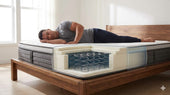
DuuDuu's hybrid combines a responsive, contouring comfort layer with zoned pocket springs, so you get cushioning in each position and a surface that springs back as you move, rather than holding you in place. The 100-night trial gives you time to confirm it works across all your sleeping positions.
Frequently Asked Questions
What firmness is best for combination sleepers?
A balanced medium to medium-firm feel usually works best, because it supports side, back and stomach sleeping reasonably well. Combine that with a responsive surface so you can change position easily through the night.
Is memory foam bad for people who move in their sleep?
Deep, slow-recovery memory foam can feel restrictive for position-changers, because it is slow to release you and can make rolling over harder. A more responsive surface, such as a hybrid or latex, suits combination sleepers better.
Is a hybrid good for combination sleepers?
Yes. A hybrid pairs responsive pocket springs with a contouring comfort layer, giving easy movement between positions plus support and pressure relief in each one. That responsiveness is exactly what combination sleepers need.
What mattress is best if you toss and turn?
First work out whether you are a natural combination sleeper or tossing from discomfort. If it is discomfort, the mattress may be the wrong firmness or worn out. A responsive, balanced medium-firm mattress in good condition suits genuine position-changers and reduces restless shifting from poor comfort.