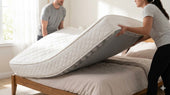
- A good mattress keeps your spine in its natural alignment, which is the main factor that prevents or relieves back pain.
- Memory foam works well for lower back pain because it contours to the body and relieves pressure points.
- Hybrid mattresses suit combination sleepers since they balance support and cushioning with better airflow.
- Latex and orthopedic mattresses are good options for upper back pain that comes from posture or sleep position strain.
- Side sleepers usually need medium to medium-firm, back sleepers do best on medium-firm to firm, and stomach sleepers should choose firm to avoid hip sinking.
Back pain is a common issue that affects millions of people worldwide.
While there are various factors contributing to back pain, your mattress can play a significant role in either alleviating or exacerbating the problem.
Choosing the right mattress can provide substantial back pain relief and improve your overall quality of life.
Here’s why your mattress matters for back pain relief and some recommendations for the best types of mattresses for different types of back pain.
The Connection Between Mattresses and Back Pain
The Role of a Mattress
A good mattress supports the natural curves and alignment of the spine.
Without proper support, the spine can fall out of alignment, leading to discomfort and back pain.
Here’s how the right mattress can make a difference:
- Spinal Alignment: A mattress that maintains the natural alignment of your spine helps reduce strain and discomfort.
- Pressure Relief: A supportive mattress alleviates pressure points, particularly in the shoulders, hips, and lower back, which can cause pain if not properly supported.
- Motion Isolation: For those who share a bed, a mattress that minimizes motion transfer can prevent disturbances that might contribute to back pain.
In this case a 3 zone mattress will be very helpful.
At DuuDuu, our mattresses are specifically 3 zones.
Factors Contributing to Back Pain
Several factors can influence the development and persistence of back pain, including:
- Age of the Mattress: An old or worn-out mattress loses its ability to provide adequate support, leading to misalignment and pressure points.
- Sleep Position: Different sleep positions require different levels of support to maintain spinal alignment.
- Weight Distribution: Your body weight can affect how a mattress responds and provides support.
Recommendations for the Best Types of Mattresses for Back Pain
For Lower Back Pain
Lower back pain is often caused by poor posture or prolonged periods of sitting.
The best mattresses for lower back pain offer firm support with a bit of cushioning.
Memory Foam Mattresses
Memory foam mattresses contour to the shape of your body, providing support where it’s needed most.
They are particularly good at alleviating pressure points and maintaining spinal alignment.
- Benefits: Excellent support and pressure relief, good motion isolation.
- Best For: Side and back sleepers.
Hybrid Mattresses
Hybrid mattresses combine the support of innerspring coils with the comfort of foam or latex. They offer a balanced feel, providing both support and cushioning.
- Benefits: Balanced support and comfort, good airflow and temperature regulation.
- Best For: All sleep positions, especially good for combination sleepers.
For Upper Back Pain
Upper back pain is often linked to poor posture or sleeping positions that cause strain.
A mattress that provides medium-firm support is typically ideal for relieving upper back pain.
Latex Mattresses
Latex mattresses are known for their durability and supportive properties. They offer a responsive feel that keeps the spine aligned without sinking too much.
- Benefits: Durable, good support, natural materials.
- Best For: Back and stomach sleepers.
Orthopedic Mattresses
Orthopedic mattresses are specifically designed to support the joints, back, and overall body. They provide targeted support to alleviate pain and discomfort.
- Benefits: Specialized support for back pain, promotes healthy spinal alignment.
- Best For: People with chronic back pain or specific orthopedic needs.
For Chronic Back Pain
Chronic back pain requires a mattress that provides consistent support and helps alleviate pain over time.
Look for mattresses that are firm enough to support the spine but also offer some contouring to reduce pressure points.
Innerspring Mattresses with Pillow Tops
Innerspring mattresses with pillow tops provide firm support with an added layer of cushioning.
This combination can help maintain spinal alignment while also providing comfort.
- Benefits: Firm support with added comfort, good airflow.
- Best For: Back and stomach sleepers.
Choosing the Right Mattress
Consider Your Sleep Position
- Side Sleepers: Opt for a medium to medium-firm mattress to ensure your shoulders and hips are properly cushioned.
- Back Sleepers: A medium-firm to firm mattress is best to maintain spinal alignment and support.
- Stomach Sleepers: A firm mattress prevents the midsection from sinking, which can cause back pain.
Test the Mattress
Whenever possible, try out mattresses in-store to see which type feels most comfortable and supportive.
Many mattress companies also offer trial periods like at DuuDuu, allowing you to test the mattress at home and return it if it doesn’t meet your needs.
Look for Quality Materials
High-quality materials tend to provide better support and last longer. Memory foam, latex, and high-density innerspring coils are good options to consider.
Your mattress is a critical component in managing and relieving back pain.
By choosing a mattress that provides the right balance of support and comfort, you can significantly reduce back pain and improve your overall sleep quality.
Whether you suffer from lower, upper, or chronic back pain, there’s a mattress out there designed to meet your needs and help you wake up pain-free.
How quickly should I expect back pain to improve after switching to the right mattress?
Most people notice improvement within 2 to 3 weeks, though full benefit can take 6 to 8 weeks as your body adapts to better alignment. If pain doesn't reduce at all after 8 weeks, the mattress is probably wrong for your body, not just slow to take effect.
Can the wrong pillow cancel out the benefits of a good mattress for back pain?
Absolutely. A pillow that misaligns your neck creates tension that radiates down through the spine, undoing the alignment work the mattress is doing. Side sleepers need thicker pillows, back sleepers medium, and stomach sleepers thin or none.
Should I see a chiropractor before or after buying a new mattress?
Either order works, but seeing a professional first can help you identify whether the pain is mattress-related, posture-related, or structural. Some chiropractors specifically recommend mattress firmness based on your spine's needs, which makes the buying decision easier.
Is sleeping on the floor actually better than a soft mattress for back pain?
Sometimes, but not for the reasons people think. The floor provides extreme firmness that prevents sinking, but it also creates massive pressure points at hips and shoulders. A medium-firm mattress with proper support is almost always better than the floor long-term.
What's the difference between an orthopedic mattress and a regular firm mattress?
Orthopedic mattresses are designed specifically for spinal support, typically with zoned firmness and reinforced lumbar areas. Regular firm mattresses are uniformly firm throughout. The orthopedic design is worth the extra cost if you have chronic conditions; otherwise, a quality medium-firm mattress is sufficient.
Can mattress-related back pain cause headaches?
Yes. Tension at the upper spine and neck from poor mattress support frequently radiates into tension headaches, especially morning headaches. If you're getting consistent morning headaches, look at the mattress and pillow combination before assuming other causes.
How does pregnancy change what mattress works best for back pain?
Pregnancy shifts your spine and adds weight asymmetrically, often causing back pain that wasn't there before. A medium-firm mattress with side-sleeping support is usually best, paired with a pregnancy pillow between the knees. Avoid very soft mattresses, which let the hips sink unevenly.
Will a heated mattress pad help my back pain at night?
Mild heat can relax tense back muscles before sleep, but most heated pads continue overnight, which can disrupt the body's natural cooling for sleep. Use heat for 20 to 30 minutes before bed, then turn it off, or use a hot water bottle that cools naturally.
Are adjustable beds worth it for chronic back pain at home?
For severe chronic conditions, yes. Being able to elevate the head or knees can reduce nighttime pain meaningfully. For everyday back pain, a quality flat mattress paired with the right pillow is usually enough and far cheaper. Note that not all mattresses work on adjustable bases.
Why does my back hurt only on weekends when I sleep in?
Extra time in bed can amplify subtle mattress problems that you don't notice on shorter nights. If staying horizontal for 9 plus hours produces pain, the mattress is the likely cause. The fix is usually a better mattress, not less weekend sleep.