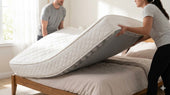
Whether you are between homes, holding a spare for guests, or storing a mattress during a renovation, doing it wrong can leave you with a mouldy, saggy, smelly mattress months later. A few precautions prevent all of that.
This guide explains how to store a mattress long-term, with particular attention to Australia's warm and humid conditions, where mould is the biggest risk.
Clean and Fully Dry Before Storing
Any moisture trapped in a mattress during storage is an invitation for mould and odours, so cleaning and drying come first.
Spot-clean any marks, then let the mattress air and dry completely before it goes into storage. Storing even slightly damp is one of the most common causes of ruined mattresses. Our guide on cleaning a mattress walks through the steps.
Store It Flat, and Never Fold a Hybrid
The single most important rule for the mattress itself is to store it flat.
Storing a spring or hybrid mattress on its side for a long period can let the springs and foam settle unevenly, and folding it can cause permanent damage. Lay it flat on a clean, level surface so the weight is evenly distributed. Our article on moving a mattress without damaging it covers the same principle.
Wrapping: Breathable Cover vs Sealed Plastic
How you wrap the mattress matters more than people realise, especially in a humid climate.
- A breathable mattress storage bag or a cotton cover protects from dust while letting moisture escape.
- Sealing a mattress tightly in plastic for months can trap humidity inside and encourage mould.
- If you do use plastic for dust protection, choose a loose, breathable wrap rather than an airtight seal, and ensure the mattress is bone dry first.
In coastal and humid parts of Australia, breathability beats a tight seal. Trapped damp is the enemy.
Choosing the Storage Location
The right spot keeps temperature, damp and pests in check.
- Aim for a cool, dry, ventilated space rather than a hot, damp shed or a leaky garage.
- Keep the mattress off a bare concrete floor, which can wick up moisture; use a pallet or a clean sheet of board.
- Protect against pests and dust, which are easier to prevent than to remove later.
Damp control over winter is its own topic; see seasonal mattress care for winter.
Don't Stack Heavy Items on Top
It is tempting to pile boxes onto a stored mattress to save space, but concentrated weight can compress the comfort layers permanently and leave dips. Keep the top of the mattress clear, or at most place light, evenly distributed items on it.
Refreshing It After Storage
When you bring the mattress back into use, unwrap it and let it air in a well-ventilated room for a few hours, ideally with some sunlight and a fan. This clears any musty smell and helps the foams settle back to full shape before you dress the bed.
Frequently Asked Questions
Can you store a mattress on its side long-term?
It is not ideal for spring or hybrid mattresses. Over a long period, storing on the side can let the springs and foam settle unevenly. Storing flat keeps the weight evenly distributed and is the safer choice.
How do you stop a mattress going mouldy in storage?
Make sure it is completely dry before storing, wrap it in something breathable rather than sealing it airtight, keep it off bare concrete, and store it in a cool, dry, ventilated space. Trapped moisture is the main cause of mould.
Can a mattress be stored in a garage?
Yes, if the garage is dry, ventilated and not prone to damp or extreme heat. Keep the mattress off the concrete floor, wrap it breathably, and avoid stacking heavy items on top. A damp or leaky garage is a poor choice.
Should you wrap a mattress in plastic for storage?
Only loosely and only if the mattress is completely dry. A tight, airtight plastic seal can trap humidity and cause mould, especially in Australia's climate. A breathable storage bag is usually better.