Latex and memory foam are the two most common comfort materials in modern mattresses, and they feel completely different to sleep on. One hugs you slowly, the other springs back instantly. Neither is better overall; they suit different people.
This guide compares how each feels, how they handle Australia's heat, how long they last, and where hybrids combine the best of both.
Quick Verdict
If you are short on time, here is the summary.
| Factor | Memory foam | Latex |
|---|---|---|
| Feel | Slow-contouring, "hugging" | Responsive, bouncy |
| Cooling | Can trap heat | Naturally cooler and breathable |
| Motion isolation | Excellent | Good |
| Durability | Good (density dependent) | Very good |
| Responsiveness | Slow to recover | Fast to recover |
| Eco options | Limited | Natural latex available |
How Memory Foam Feels
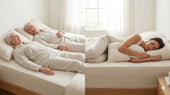
Memory foam responds to heat and pressure, slowly moulding to your body and creating that signature "sinking in" sensation. It excels at pressure relief and motion isolation, so it is popular with side sleepers and couples.
The downsides are that it can sleep warm and feels slow to respond, which some people find makes changing position harder. Quality depends heavily on foam density; our guide on memory foam density explains why.
How Latex Feels
Latex is springy and responsive. It contours to your body but pushes back, so you feel supported "on top of" the mattress rather than sinking into it. It recovers instantly when you move, which combination sleepers tend to love.
Latex is also naturally durable and tends to sleep cooler than memory foam, two reasons it features in many premium builds.
Natural vs Synthetic Latex
Latex comes in two forms. Natural latex is made from rubber tree sap and is prized for durability and its eco credentials. Synthetic latex is made from petrochemicals and is cheaper, while blends sit in between. Natural latex generally lasts longer and is the choice for buyers prioritising sustainability.
Temperature and Breathability for Australian Sleepers
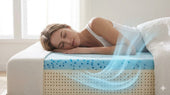
Heat matters in Australia, and this is where latex has an edge. Latex is naturally breathable and is often produced with a pinhole structure that promotes airflow, so it tends to sleep cooler than dense memory foam, which can trap body heat.
If sleeping cool is a priority, also look at the cover and overall construction, not just the comfort foam. Our guide on how to choose a cooling mattress covers the full picture.
Durability and Value Over Time
Latex is one of the most durable comfort materials available and often outlasts memory foam, though it usually costs more upfront. High-density memory foam also lasts well and typically comes at a lower price. The best value depends on your budget and how long you plan to keep the mattress.
Where Hybrids Combine Both
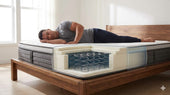
You do not always have to choose. A hybrid mattress pairs a pocket-spring support core with comfort layers that can include latex, memory foam, or both. This gives you the breathability and bounce of springs, the pressure relief of foam, and, where latex is used, a cooler and more responsive surface. For the broader comparison, see memory foam mattress versus hybrid mattress.
Frequently Asked Questions
Is latex cooler than memory foam?
Generally yes. Latex is naturally breathable and is often made with an open, pinhole structure that promotes airflow, while dense memory foam tends to retain body heat. For hot Australian nights, latex or a hybrid usually sleeps cooler than all-foam memory foam.
Does latex last longer than memory foam?
Latex, especially natural latex, is very durable and often outlasts memory foam. High-density memory foam also lasts well; low-density memory foam does not. Density and material quality matter more than the material name alone.
Is a latex mattress good for back pain?
It can be. Latex offers responsive support that keeps the spine aligned while still relieving pressure. As with any mattress, the right firmness for your body and sleep position matters most. See our guide on choosing a mattress for back pain.
Is latex better for hot sleepers?
For many hot sleepers, yes, because latex breathes better than dense memory foam. A hybrid with latex and pocket springs is often the coolest-sleeping option of all.